Outdoor design
Waterwise Garden Design in Morocco: A Practical Guide
Designing an outdoor space in Morocco today means working around a constraint that isn’t going away: water. Seasonal restrictions are spreading, costs are rising, and a natural lawn remains one of the thirstiest features a garden can have.
The good news is that an outdoor space can stay green and pleasant all year without watering. It just needs to be designed differently.
Start by zoning, not by picking products
The most common mistake is replacing one lawn with another surface, like for like. A well-designed outdoor space is first divided into zones based on actual use:
- living zones, where people walk, children play, and chairs go;
- transit zones, between the house, the gate and the pool;
- zones you look at without walking on, along borders or at the back of the garden.
Each calls for a different answer, and it’s this breakdown that gives the result its coherence.
Artificial grass for living zones
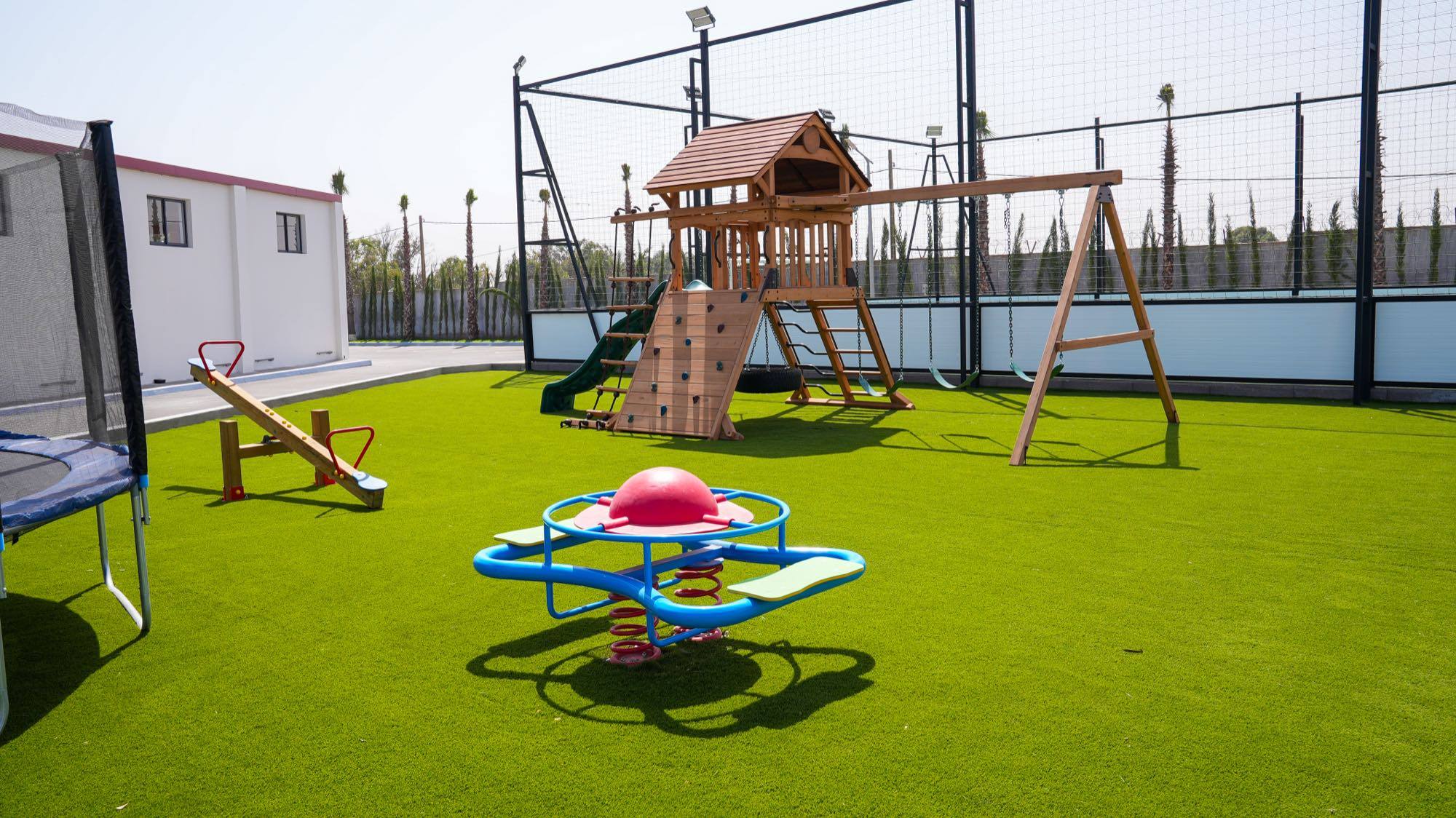
This is where it earns its place: the surface stays usable, clean and green, with no watering and no mowing. Where children play, a pile height of 30 to 40 mm gives a natural look and a comfortable feel underfoot.
The technical point not to overlook is drainage. On soil, that means excavation and a drainage bed; on a terrace or rooftop, water needs to keep reaching the existing outlets. See our dedicated garden grass page for the detail.
Mineral surfaces and mulch for transit zones
On walkways, gravel, paving or stepping stones outperform any planted surface: nothing wears down, nothing compacts, and the contrast in materials gives the garden structure. A mineral mulch around planting beds also cuts down on evaporation.
Plants that don’t need much water
For planted zones, the Mediterranean and local plant palette does the job unassisted: olive trees, oleander, lavender, rosemary, agaves, ornamental grasses. These species suit the climate and, once established, need very little.
Where planting isn’t possible, indoors, on a blank wall or under a porch with no light, artificial green walls bring in the volume of planting without the upkeep.
Plan for shade as much as for the ground
This is the angle most often overlooked. An outdoor space with no shade is unusable from May to September, whatever surface it has. Pergolas, shade sails, well-placed trees: shade determines whether a space actually gets used or just looked at. It also limits how much surfaces heat up, artificial grass included.
What this looks like over time
An outdoor space designed this way needs a few minutes of maintenance a month: brushing the grass, clearing leaves, a light trim at the end of the season. No automatic watering to schedule, no mowing, no fertiliser.
The investment happens upfront rather than being spread out over the years. That’s a trade-off, and we present it as such in our artificial versus natural grass comparison.
Where to start
The simplest approach is to start from your actual space: area, exposure, use, access constraints. We visit for a free site measurement before any quote, and our Casablanca showroom lets you compare ranges in person. Request your quote, or come and see us.