Choosing your grass
Why Artificial Grass Is Booming in Morocco: 6 Reasons
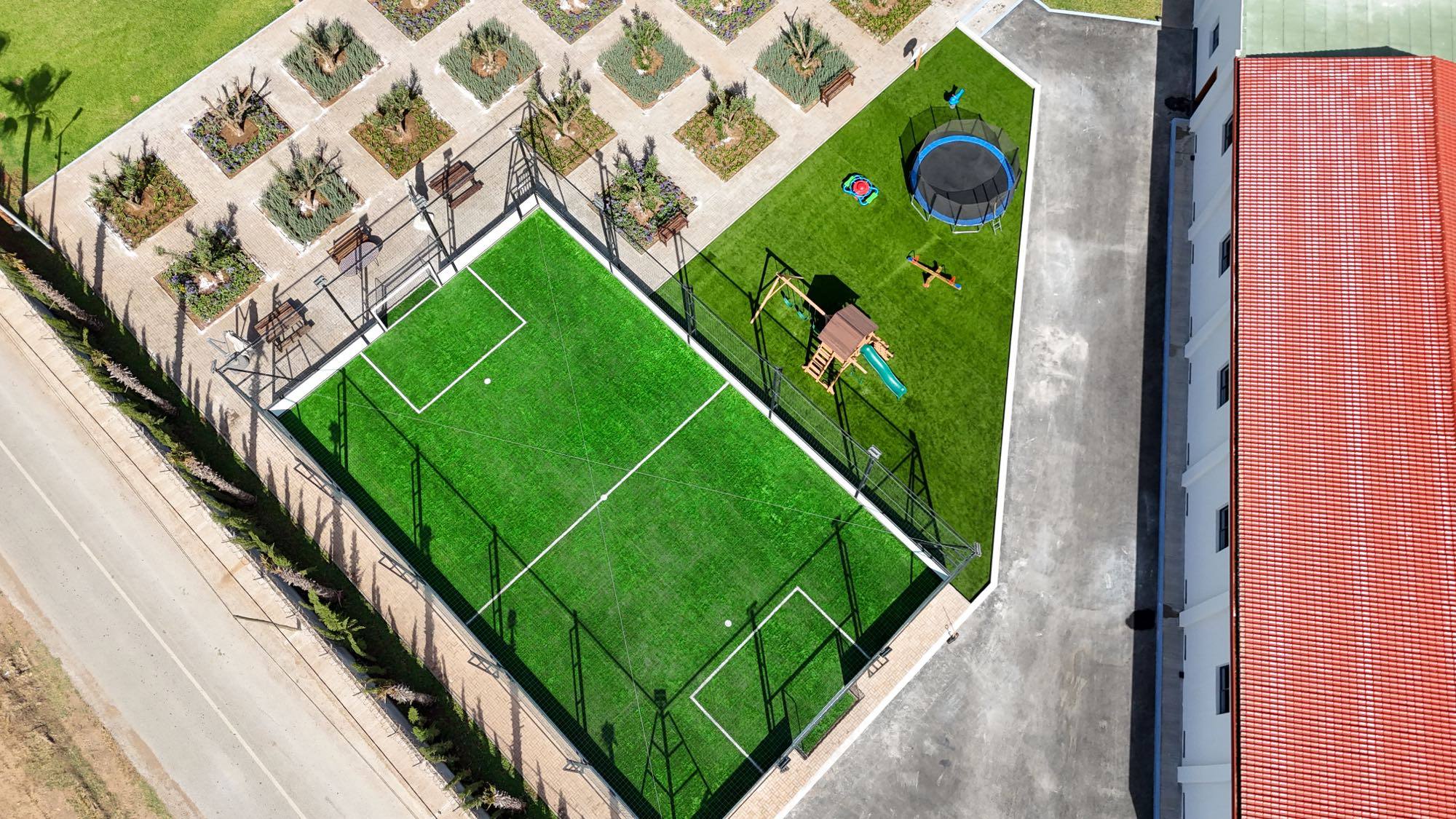
Artificial grass is no longer a niche product in Morocco. It’s now found in private gardens, sports clubs, schools and public spaces, for reasons that owe less to fashion than to some very practical, everyday constraints: water, heat and the cost of maintaining a natural lawn.
Here are the six reasons that come up most often in our conversations with clients, from private households to local authorities.
1. Water, the argument that changed everything
A natural lawn uses somewhere between 1,500 and 2,000 litres per square metre a year in typical Moroccan conditions. On a 200 m² garden, that adds up to hundreds of thousands of litres every single year, in a country where the resource is under real pressure and several municipalities already apply seasonal watering restrictions.
Artificial grass removes this cost entirely, at a stroke. It’s the number one reason local authorities are switching, and increasingly, private households are following their lead.
2. A surface you can use twelve months a year
A natural lawn has seasons: it yellows and thins out in summer, waterlogs in winter, and turns to mud wherever drainage is poor. A properly drained synthetic pitch, by contrast, stays playable straight after a downpour and looks the same in July as it does in January.
For a club running back-to-back bookings all week, or a school where the yard gets used at every single break, that constant availability often matters more than looks.
3. Maintenance measured in minutes, not weekends
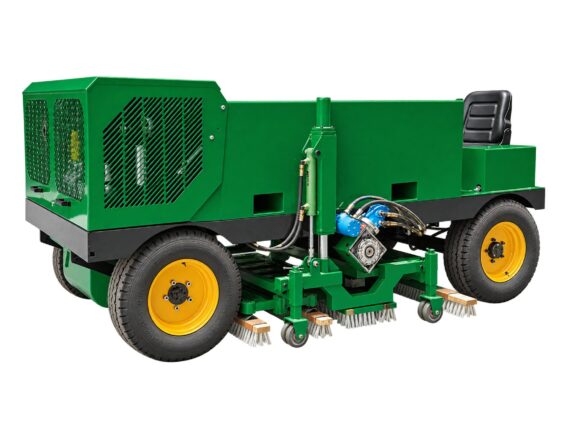
No mowing, no fertiliser, no treatments, no scarifying. Maintenance comes down to regular brushing to lift the fibres, clearing leaves, and checking the drainage after the rainy season. Our maintenance guide sets out the real calendar, season by season.
4. A long lifespan, if you choose well
Good-quality grass lasts between 8 and 15 years, depending on the fibre, the density and the level of UV exposure. That’s a wide gap, and it’s decided at the point of purchase: a UV-treated monofilament fibre with a reinforced backing simply doesn’t age the way an entry-level product laid on a poorly prepared base does.
It’s also why ground preparation is never the place to cut corners.
5. Safety, where there are children
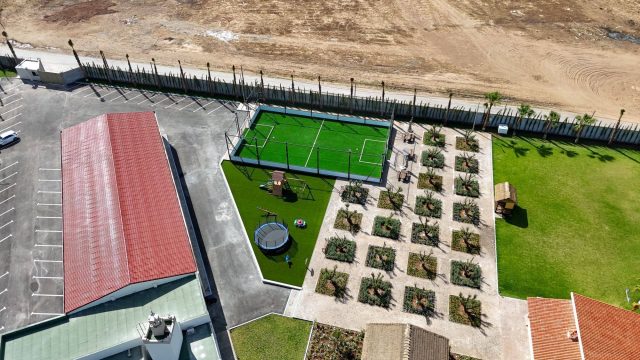
On a playground, the ground isn’t decoration: it has to cushion a fall from the highest free fall height of the equipment installed, which is what the EN 1177 standard sets out. Grass paired with the right shock-absorbing underlay meets that requirement in a way a concrete slab or a compacted lawn does not.
Our playground ranges are selected against exactly this criterion.
6. A consistent playing surface for sport
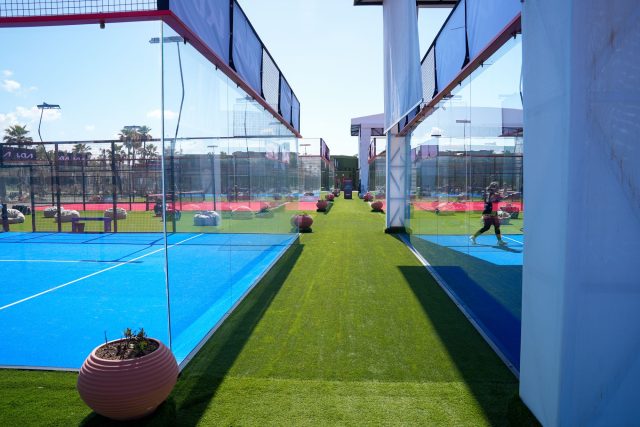
On a football pitch, what matters is consistency: even bounce, stable footing, no bald patches in front of the goals. Ranges certified FIFA Quality and FIFA Quality Pro are tested in the lab and on the pitch for exactly this. For padel, FEP approval follows the same logic, with sand infill that directly governs ball speed.
What it doesn’t replace
Synthetic grass isn’t a universal answer. It doesn’t cool the air the way a real lawn does, it gets hotter in direct sun, and it’s an upfront investment rather than one spread out over time. We’ve set out these trade-offs without dressing them up in our artificial grass versus natural grass comparison.
How to get started
The best starting point is still to see and touch the ranges: the difference between two pile heights or two densities doesn’t come across in a photo. Our Casablanca showroom is open seven days a week, and a technical site visit with measurements is free before any quote.