Choosing your grass
Building a Padel Court in Morocco: A Project Owner’s Guide
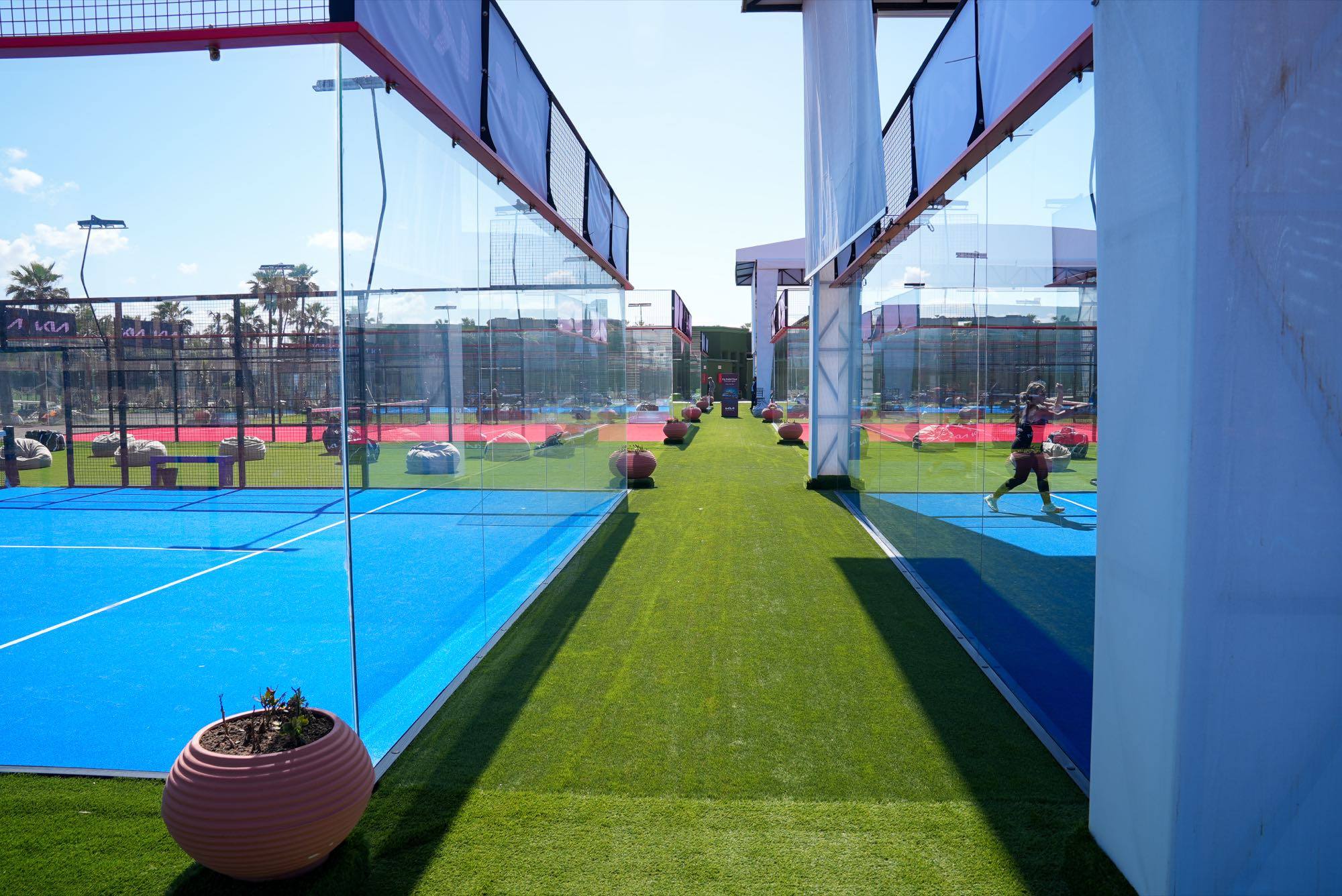
Padel has taken hold in Morocco within a few years, and projects keep multiplying: private clubs, hotel complexes, residential developments, tennis courts converted to padel. The demand is there.
What separates a court that runs at full capacity from one that players abandon within three months comes down to technical decisions made early on. Here’s what they are.
The dimensions are non-negotiable
A padel court measures 20 by 10 metres, for both singles and doubles. Clear height must be at least 6 metres above the entire playing surface, more if you’re aiming for competition play.
This is the first constraint to check on the plot: with walkways around the court, the total footprint needs to be noticeably larger than the court itself. A plot that’s too tight costs you in playing comfort and safety later on.
The slab: where the final quality is decided
Padel is the sport where the flatness of the base is felt most directly, because the ball bounces low and fast. A defect of just a few millimetres translates into unpredictable bounces that players notice immediately.
Two points not to compromise on:
- Flatness, checked with a straight edge across the whole surface, not just the centre.
- Drainage slope, usually around one percent, without which water pools and the court stays out of action after every downpour.
On a coastal project, drainage matters twice as much: standing salt water degrades the base far faster than rainwater. It’s a constraint we addressed on our seafront padel club project.
Structure and glazing
The frame carries the glass walls and the mesh panels. In Morocco’s climate, especially on the coast, anti-corrosion protection isn’t optional: galvanising followed by powder coating. A poorly protected frame rusts within a few seasons.
Standard tempered glass runs 10 to 12 mm thick. It’s an item low-cost quotes often cut corners on, and it’s a safety item.
The turf: certification and sand infill
The playing surface is a specific artificial turf, usually 12 mm, FEP-certified. Three parameters determine how it plays:
- Fibre height, which governs ball speed.
- Sand quantity, set during installation. Too much sand and the court becomes slow and heavy; too little and it becomes slippery, with a real risk of falls.
- Even sand distribution across the whole surface, otherwise the bounce changes from one area to another.
This setting is checked after the first few weeks of play, once the sand has settled. A court delivered without this follow-up isn’t finished.
Lighting, often undersized
Most slots are played in the evening: lighting isn’t an accessory, it’s what makes the court usable during the hours when it fills up. Aim for even illumination across the whole surface, with no dark patches at the back of the lanes, and floodlights positioned so they don’t dazzle players on serve.
The most common pitfalls
- Cutting costs on the slab to put more budget into the glazing. It should be the other way round: glass can be replaced, the slab can’t.
- Neglecting drainage, and losing days of operation every time it rains.
- Choosing uncertified turf to save a little per metre, and ending up with a bounce that regular players reject.
- Overlooking the extras: access, changing rooms, waiting area. A club gets judged on these too.
What about converting a tennis court?
It’s common and often makes sense: a tennis court measures 23.77 m by 10.97 m, which is enough to fit a padel court with proper walkways around it. The existing slab needs to be surveyed, particularly its flatness and any cracking, before any decision is made.
Our role
Proturf supplies the FEP-certified turf, sand and accessories, and puts you in touch with a partner installer trained on these ranges. We support both new-build projects and resurfacing work, anywhere in Morocco from our warehouses.
See our padel turf page, our projects, or request a quote: the technical site visit and measurement are free.