Choosing your grass
How to Choose Artificial Grass: 7 Criteria That Matter
At a glance, two artificial lawns look alike. Three summers later, one is still upright and dense, the other is flattened, dull and gaping at the seams. The difference comes down to technical criteria you can’t see in a catalogue photo.
Here are the seven that matter, in the order we walk through them with a client.
1. Real-world use, before anything else
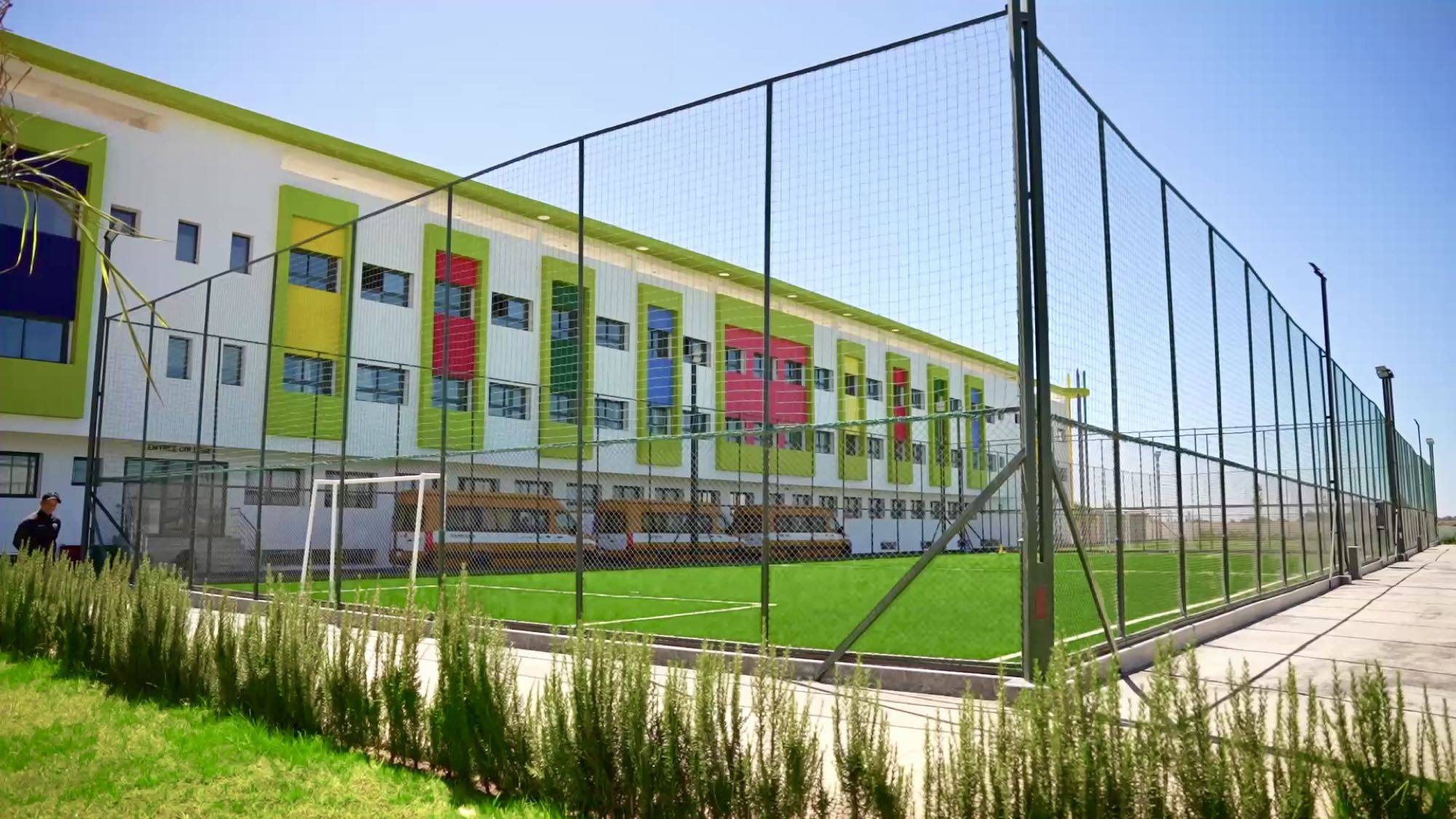
A balcony, a family garden with a dog, a school yard and a club pitch don’t call for the same product. The first question is never “which grass?” but “who’s using it, how often, and for what?” A decorative grass laid on a heavy-traffic area flattens within a season.
2. Fibre type
Monofilament is a single strand, often ribbed, that stands up better to foot traffic and springs back into shape. Fibrillated fibre comes in strips that split with wear: cheaper, but it flattens faster. For heavy use, monofilament is the default choice.
UV treatment matters just as much under the Moroccan sun: it’s what stops the colour fading after a few summers.
3. Density
Expressed in stitches per square metre or in weight, density determines how well the grass holds up over time. A low-density grass shows its backing as soon as the fibres flatten, and traffic areas mark quickly. It’s the criterion most directly tied to lifespan.
4. Pile height
Counterintuitive but important: taller doesn’t mean better.
- 20 to 30 mm: traffic areas, terraces, poolside. Easy to clean and doesn’t flatten.
- 30 to 40 mm: gardens and living spaces, for a natural look and comfortable underfoot feel.
- 40 mm and above: eleven-a-side football, where the fibre needs to hold the infill and cushion footing.
A pile that’s too tall on a daily-use path flattens and never stands back up.
5. Backing
This is the mesh that holds the fibres in place. Thin backing tears when cut and comes loose through hot-cold cycles; reinforced backing keeps its tension and its seams closed. You can’t see it on the shelf, which is exactly why you need to ask about it.
6. Drainage
Perforating the grass isn’t enough: it’s the base plus the grass together that drain. On soil, that means excavation and a drainage bed. On a terrace, water needs to keep reaching the existing outlets, otherwise it sits under the surface and eventually starts to smell.
This is covered in detail in our installation guide.
7. Certifications, where they apply
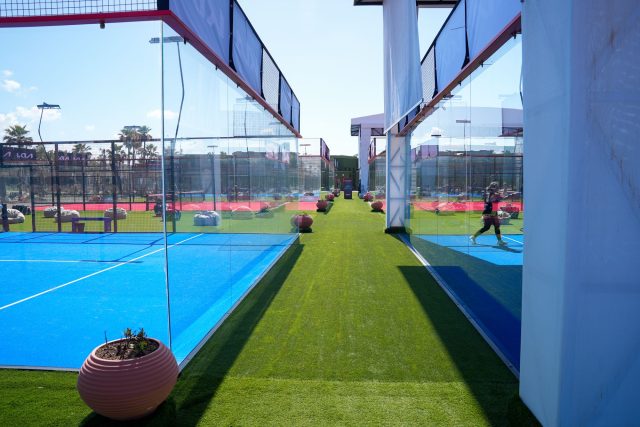
For a football pitch built for competition, FIFA Quality and FIFA Quality Pro ranges are tested in the lab and on site. For a playground, the EN 1177 standard governs free fall height. For padel, FEP approval. On a private garden, these certifications serve no purpose: it’s better to put the investment into the fibre and the ground preparation.
The test that beats any catalogue
Take the sample, scrunch it in your hand for a few seconds, then let go. Good grass springs back almost completely. Then run your hand against the pile: the fibres shouldn’t come loose. Finally, look at the underside, the density of the stitching is far easier to read there than on the surface.
This is exactly why our Casablanca showroom displays the ranges in person, open seven days a week. For more detail, see the full guide to artificial grass in Morocco or request a free quote.